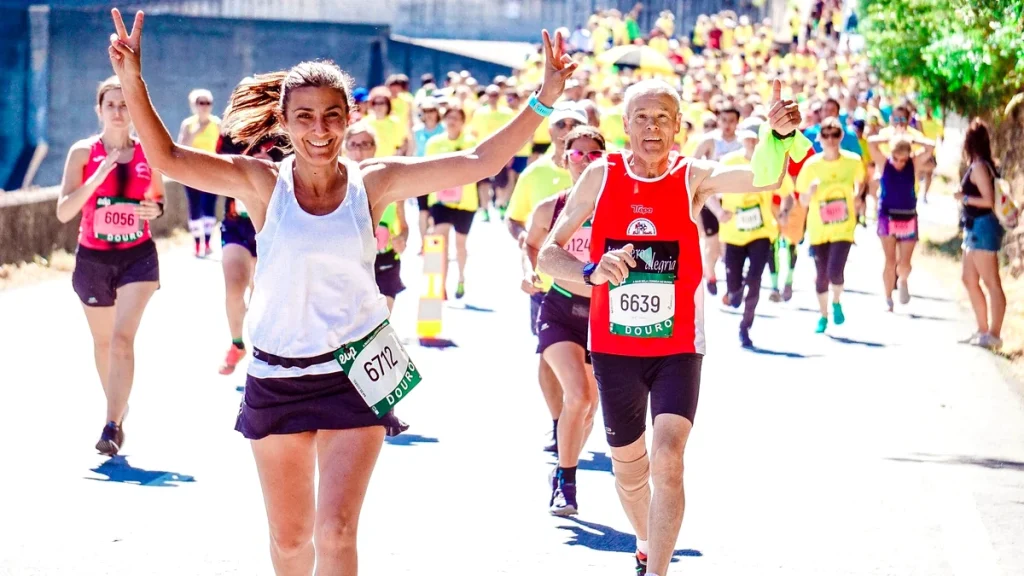
Knowing how to calculate running pace is the difference between guessing and planning. Pace is simply how long it takes you to cover one mile or one kilometer, and once you can work it out from a finish time, you can flip the math and predict how long a 5K, half marathon or marathon should take at a given effort.
Below you will find the formulas, a 5K worked example, a race-prediction example, mile to kilometer conversion, and the mistakes that throw people off. Keep a recent race time or GPS workout nearby and follow along.
What running pace actually means
Pace is time per unit of distance. In the United States, runners usually talk in minutes per mile. Most of the rest of the world uses minutes per kilometer. Both answer the same question: how long does each mile or each kilometer cost you at this speed?
Pace is not the same as speed. Speed is distance per unit of time (miles per hour or kilometers per hour). Pace is the inverse. A 6:00 per mile pace is 10 mph. A 5:00 per kilometer pace is 12 km/h. Most training plans, race predictors and GPS watches speak in pace, so that is the language this article sticks to.
The two formulas you need
Every pace calculation is one of these two moves:
- Pace from time and distance: divide total time by distance. That gives you minutes per mile or per kilometer.
- Finish time from pace and distance: multiply pace by distance. That gives you the estimated finish clock.
Work in total seconds first, then convert back to minutes and seconds. Clock notation like 28:00 is fine for reading, but dividing 28 by 5 and calling it 5.6 minutes is awkward when you want a readable pace. Seconds stay clean.
- 1 minute = 60 seconds
- To turn seconds into m:ss, divide by 60 for the minutes, and the remainder is the seconds
- To turn m:ss into seconds: minutes x 60 + seconds
Mile and kilometer distances you will use
The international mile is exact. According to the NIST Guide to the SI, Appendix B.8, 1 mile equals 1.609344 kilometers. That factor never changes, so conversions between per-mile and per-kilometer pace always use the same multiplier.
World Athletics sets the marathon at 42.195 km (26 miles 385 yards). A half marathon is exactly half of that: 21.0975 km, or about 13.1094 miles. A 5K is 5.000 km, which is about 3.107 miles.
- 1 mile = 1.609344 km
- 5K = 5.000 km = about 3.107 miles
- Half marathon = 21.0975 km = about 13.109 miles
- Marathon = 42.195 km = about 26.219 miles
Worked example 1: how to calculate running pace from a 5K
Say you finish a 5K in 28:00. You want pace per kilometer and per mile.
Step 1: convert the finish time to seconds. 28 minutes = 28 x 60 = 1,680 seconds.
Step 2: pace per kilometer = total seconds / kilometers = 1,680 / 5 = 336 seconds per km. 336 / 60 = 5:36 per km.
Step 3: distance in miles = 5 / 1.609344 = about 3.107 miles. Pace per mile = 1,680 / 3.107 = about 540.7 seconds per mile, which is 9:01 per mile.
So a 28:00 5K is roughly 5:36/km or 9:01/mi. If your watch shows something close after the cool-down, your GPS and the official course are in agreement. If it is far off, the course may have been long or short, or the watch may have drifted.

You can do the same math for any distance you have already run. Plug the time and distance into our running pace calculator if you want the pace, speed and race estimates without working the seconds by hand.
Worked example 2: finish time from a target pace
Now flip it. You want to run a half marathon at 9:30 per mile. How long will that take, and what is the same effort as a marathon?
Half marathon at 9:30/mi:
- Pace in seconds: 9 x 60 + 30 = 570 seconds per mile
- Half marathon distance: 21.0975 / 1.609344 = about 13.109 miles
- Finish time: 570 x 13.109 = about 7,472 seconds = 2:04:32
Marathon at the same 9:30/mi:
- Marathon distance: 42.195 / 1.609344 = about 26.219 miles
- Finish time: 570 x 26.219 = about 14,945 seconds = 4:09:05
Those are flat, even-pace estimates. Hills, weather, crowding and how well you fuel will move the real clock. Still, the multiplication gives you a honest target before you write a race plan.

Converting minutes per mile and per kilometer
Because 1 mile = 1.609344 km, the conversion is a straight multiply or divide:
- Minutes per mile to minutes per km: divide the per-mile pace (in seconds) by 1.609344
- Minutes per km to minutes per mile: multiply the per-km pace (in seconds) by 1.609344
Two quick checks:
- A 5:00 per km pace is 300 x 1.609344 = about 483 seconds per mile, or 8:03 per mile
- An 8:00 per mile pace is 480 / 1.609344 = about 298 seconds per km, or 4:58 per km
A handy rule of thumb many coaches use is “multiply km pace by 1.6 for a rough mile pace,” which is close enough for ballpark talk. For race goals, use the full 1.609344 factor.
Average pace vs lap pace vs goal pace
GPS watches throw three related numbers at you, and they are not the same:
- Average pace is total time divided by total distance for the whole run. That is the number this article calculates.
- Current or lap pace is what you are doing right now, or over the last mile or kilometer. It jumps around with hills and traffic lights.
- Goal or target pace is the average you are aiming for. Race plans often break it into slightly faster or slower segments, but the goal is still an average.
When someone asks “what pace did you run?” they almost always mean average pace for the whole effort, not your fastest kilometer.
Common mistakes when you calculate pace
- Mixing units. Dividing a marathon time by 26 instead of 26.219 (or by 42 instead of 42.195) shifts the pace by several seconds per mile.
- Using clock minutes as decimals. A 28:30 finish is 28.5 minutes, not 28.30. Thirty seconds is half a minute, so 28 + 30/60 = 28.5.
- Trusting a short GPS loop as exact. Out-and-back routes with tall buildings can under- or over-count distance. A certified course or a measured track is cleaner for testing pace.
- Ignoring warm-up miles. If your watch includes a jog to the start, your “race pace” looks slower than the race itself.
- Confusing pace with splits. Equal splits mean each mile or km took the same time. Negative splits mean you ran the second half faster. Both still have one average pace for the whole race.
Putting pace to work in training
Once you know how to calculate running pace, training talks make more sense. Easy runs sit well slower than race pace. Tempo or threshold work sits closer to a hard 10K effort. Intervals are faster still, with recovery jogs between them. You do not need a lab test to start. Take a recent race, find the average pace, and build workouts a set amount slower or faster than that number.
If you also track how long those sessions last on the calendar, our timesheet calculator is overkill for a single run, but it is handy when you log weekly training hours the same way you log work hours.
For phone-side race math on the go, our team also makes Pace Calculator for Runners on Google Play. Use it at most as a backup to the formulas above, not a replacement for understanding them.
Frequently asked questions
How do you calculate running pace per mile?
Convert your total time to seconds, divide by the distance in miles, then turn the result back into minutes and seconds. Example: 1,680 seconds for a 5K (about 3.107 miles) is about 9:01 per mile.
How do you calculate pace per kilometer?
Same method with kilometers. 1,680 seconds over 5 km is 336 seconds per km, or 5:36 per km.
What is a good running pace?
There is no single good pace. Beginners might jog around 12:00 to 15:00 per mile. Recreational 5K runners often land somewhere near 8:00 to 11:00 per mile. Elite road racers are much faster. Compare yourself to your own recent races, not to someone else’s highlight reel.
How do I convert min/km to min/mile?
Multiply the per-kilometer pace in seconds by 1.609344. A 5:00/km effort becomes about 8:03 per mile.
How long is a marathon in miles?
About 26.219 miles, or exactly 42.195 km as defined by World Athletics.
Distances in this article use the NIST mile conversion and World Athletics road-race distances. GPS watches and local courses can differ slightly from those official figures, so treat predicted finish times as estimates and
adjust for hills, weather and how you feel on the day.
Related calculators: the running pace calculator and the proportion calculator.